Mostrando entradas con la etiqueta Rumba. Mostrar todas las entradas

martes, 23 de abril de 2019

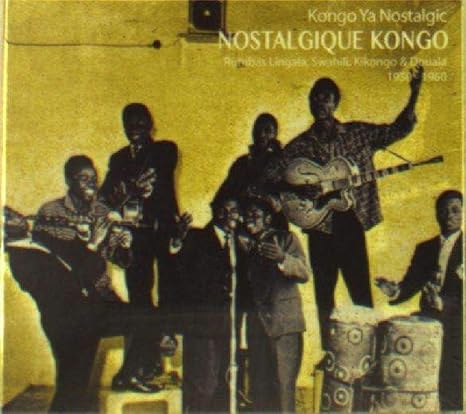
Nostalgique Kongo - Rumbas Lingala, Swahili, Kikongo & Douala 1950-1960


El trasplante de rumba afrocubana al Congo es uno de los eventos más importantes en la historia de la música africana.

En ambas orillas del Congo, el trasplante de la rumba cubana tuvo lugar en el período de entreguerras, gracias al paso en los puertos de África occidental de buques de carga procedentes del Caribe. Esta música de baile urbano, nacida a fines de la década de 1930, estaba destinada a resonar en toda África en idiomas bantúes como el lingala, el swahili, el kikongo y el dalaala.

¿Congo anacrónico? Sin ir tan lejos como el reino mítico que, en su apogeo, se extendió en el este desde el Océano Atlántico hasta el río Kwango y en el sur desde el río Congo hasta el río Loje, rindiendo homenaje a la rumba congoleña significa abarcar un territorio lejano. más allá de los límites actuales de la actual República del Congo y el antiguo Congo belga, ahora la República Democrática del Congo. Esta música de baile urbano, nacida a fines de la década de 1930, estaba destinada a resonar en toda África en idiomas bantúes como el lingala, el swahili, el kikongo y el dalaala. En ambas orillas del Congo, el trasplante de la rumba cubana tuvo lugar en el período de entreguerras, gracias al paso en los puertos de África occidental de buques de carga procedentes del Caribe. El comercio se multiplicó con los marineros cubanos y con los porteadores liberianos y marfileños, los registros de 78 rpm cambiaron de manos y transmitieron nuevos sonidos que gradualmente se infiltraron en la tierra a lo largo del río. Y así, diez años después, África se inundaría de discos de música afrocubana, comenzando con los publicados por la firma británica EMI bajo su sello His Master's Voice. El nombre en clave '' serie GV '' no tenía un significado particular, pero la leyenda local lo tradujo en '' Grandes vocalistas ''.

Como muestra nuestra selección, el trasplante de rumba afrocubana al Congo es uno de los eventos más importantes en la historia de la música urbana africana. Perpetuada por artistas de la talla de Tabu Ley Rochereau y Papa Wemba, la rumba congoleña continúa evolucionando después de recuperar, en el último siglo, un sonido polirrítmico cuya fuente se encuentra en África Central.


1.Mpenzi tina
Isaya Mwinamo (Interprete)
Tom Miti (Interprete)
2.Kila mwaka
Isaya Mwinamo (Interprete)
Tom Miti (Interprete)
3.Amis benatar
Paul Mwanga (Interprete)
4.Wenda samuna
Nelson Simon (Interprete)
Pedro Martin (Interprete)
5.O yeto mbuta zeto
Nelson Simon (Interprete)
Pedro Martin (Interprete)
6.Djombi dikwamba
E Bongue Bollanga (Interprete)
7.Maniaka ma ngomba nyama
E Bongue Bollanga (Interprete)
8.A muna iyo ye bobe
Gustave Dalle (Interprete)
9.Mulembe e mba o ndabo
Gustave Dalle (Interprete)
10.Akeyi na zandu
Arco Trio (Interprete)
Wendo (Interprete)
11.Nganga nkisi
Arco Trio (Interprete)
Wendo (Interprete)
12. Bakosi liwa ya wendo
Wendo (Interprete)
13.Bokilo
Wendo (Interprete)
14.Rumba Wendo
Wendo (Interprete)
15.Bona delice
Dadet (Interprete)
Orquesta Novedad (Interprete)
Philos Yanno Penki (Interprete)
16.Bokano ya babut
Camille Feruzi (Interprete)
17.Chérie babolingo
Camille Mokoko (Interprete)
18.Oh
Léon Bukasa (Interprete)
19.Bilengende
20.Ata balobi
21.Falanga wa njembo
Franc Lassan (Interprete)
Rumbanella Bande (Interprete)
22.Rumbanella bande
Franc Lassan (Interprete)
Rumbanella Bande (Interprete)
23.Amondembe cha cha cha
Adou Elanga (Interprete)
Micky (interpretar)
Roitelet (Interprete)
Tino Baroza (Interprete)

lunes, 12 de octubre de 2015

Pancho Quinto - En el Solar la Cueva del Humo (1997)


Francisco Hernández Mora (ab 23, 1933 hasta feb 11, 2005), mas conocido como Pancho Quinto, fue un percusionista y profesor cubano de rumba. Fue el fundador del Yoruba Andabo y uno de los "padrinos" del guarapachangueo estilo de rumba cubana. Su carrera en solitario comenzó en la década de 1990 después de que llamó la atención internacional a través de sus colaboraciones con Jane Bunnett y otros artistas.

Primeros años
Francisco Hernández Mora nació el 23 de abril de 1933, en Belén, un barrio de La Habana. Entre las edades de 12 y 14, se unió a la comparsa Los Dandys, donde se le dio el nombre de Pancho Quinto. Quinto se fue a trabajar con su padre a los muelles, donde iba a entrar en contacto con figuras importantes en el mundo de la rumba, así como la sociedad Abakuá. Le enseñaron tambores batá dos de los maestros del instrumento, Pablo Roche y Jesús Pérez

Carrera profesional y ascenso a la fama
En la primera mitad de la década de 1950, tocó en Los componedores de Batea y Los Guaracheros de Regla, así como en los grupos de tambores batá Francico Bautista, José Fernández "Pito", y Jesús Pérez. Quinto luego se unió brevemente La Sonora Matancera, quien en ese momento contó con Celia Cruz como cantante principal. Durante su trabajo en el Club Tropicana con la banda de acompañamiento Los D'Aida, declinó la invitación de Jesús Pérez a unirse al Conjunto Folklórico Nacional, al fin para seguir trabajando en los muelles. En 1961, se convirtió en uno de los miembros fundadores del Guaguancó Marítimo Portuario, un grupo de rumba de aficionados de los muelles de La Habana.

En 1981 Guaguancó Marítimo Portuario se convirtió en Yoruba Andabo, un grupo de rumba profesional que incorpora ideas rítmicas de Quinto de batá y cajón (caja de madera) un estilo conocido como el guarapachangueo (iniciado en la década de 1970 por Los Chinitos). La popularidad de Yoruba Andabo aumentó durante la década, ganando exposición con el documental de 1986 El país de los orichas. La banda ganó la atención internacional después de su participación en el álbum de Jane Bunnett Espíritus's de La Habana (grabado en 1991 y lanzado en 1993), que fue seguido por el lanzamiento de su álbum El Callejón de los rumberos en América del Norte en 1996. Además, Quinto se hizo conocido a percusionistas americanos a través de su discípulo Orlando "Puntilla" Ríos, quien emigró a los EE.UU. en la década de 1980.


Años posteriores y muerte
Alrededor de 1997 Quinto dejó Yoruba Andabo para grabar su primer álbum en solitario En el solar de la cueva del humo y siguió colaborando con Jane Bunnett y otros artistas. Su segundo álbum, Rumba sin fronteras, fue lanzado en 2003. Quinto registró un tercer álbum en solitario en Toronto que permanece inédito.
Pancho Quinto murió el 11 de febrero de 2005, en La Habana.
Wikipedia


1. Lenguasa
2. El Errante
3. La Merdia Vuelta
4. En el Solar la Cueva del Humo
5. La Rana
6. Ajiaco Cubano
7. Tiembla Tierra
8. El Cisme Blanco
9. El Sinsonte

lunes, 4 de marzo de 2013

Franco & Le TPOK Jazz - Francophonic (2008) [Zaire] (2x2cd)


As his recording career stretched over about 35 years and more than 150 albums, it would be impossible for any Franco compilation, even a two-CD one, to give but a taste of his overall work. If you're willing to accept the limitations inherent in a two-CD set for such a prolific artist, however, Francophonic does a pretty good job of both assembling highlights from his discs and providing some sort of outline to his musical evolution. It samples from numerous eras over the course of its 28 tracks, spanning the years 1953-1980 and lasting a good two and a half hours. In some ways it reflects the changes in African popular music as a whole during this period. It almost sounds a little like a light fusion of Latin and jazz influences in its early rhumba-like tunes, growing toward a more steadily rhythmic and ebullient Zairian sound by the end of the '60s, and stretching out into far longer groove-oriented pieces on the '70s recordings that take up most of disc two. It's important to remember, however, that guitarist-songwriter Franco was not simply following trends, but was among the most prominent initiators of these developments in African music. The cluster of recordings from the early '70s on this set seem to be the ones in which he both cements his musical vision and lays down some of his best tracks, particularly in the more haunting tunes that include some call and response vocals, and the tougher outings that contain some of his most forceful guitar work. The 48-page booklet presents an historical overview of his life and music (in both English and French), though some might find it frustrating that more thorough discographical information beyond the original years of release isn't included. It can be a little confusing for Franco newcomers in particular to get a handle on the personnel he used as well, though to be fair to the compilers, discographical data is hardly an easy thing to acquire for African recordings of this vintage, and the booklet does list years of service for many of the singers and musicians with whom Franco played in his bands.


VOLUMEN 1

CD1

01. Esengo Ya Mokili

02. Tika Kondima Na Zolo

03. Anduku Lutshuma

04. On Entre O.K., On Sort O.K.

05. Tcha Tcha Tcha De Mi Amor

06. Mosala Ekomi Mpasi Embonga

07. Sansi Fingomangoma

08. Bato Ya Mabe Batondi Mboka

09. Bazonzele Mama Ana

10. Bolingo Ya Bougie

11. Ku Kisantu Kikwenda Ko

12. Tozonga Na Nganga

13. Annie Ngai Nalinga

14. Marie Naboyi

15. Boma L'heure

16. Nzube Oleka Te

17. Likambo Ya Ngana

18. Infidelite Mado


CD2

01. AZDA

02. Mambu Ma Miondo

03. Minuit Eleki Lezi

04. Mabele

05. Kinsiona

06. Alimatou

07. Cherie Bondowe

08. Liberte

09. Lisolo Ya Adamo Na Nzambe

10. Nalingaka Yo Yo Te


Franco spent the final decade of his career mostly in exile, overseeing his franchise. A national treasure in Zaire (he was to the former Belgian Congo roughly twice what Springsteen is to Jersey), he lived in Paris for a good deal of the 1980s, as he fell in and out of favor with Zaire's dictator Mobutu Sese Seko. His group Tout Puissant ("The Almighty") OK Jazz-- a dance band, not a jazz band-- had one cluster of members based in Brussels, another back home in Kinshasa. They marked their 25th anniversary with a series of four albums, and followed that up with a "just like old times" collaboration with their former singer Sam Mangwana, then a "we're buddies despite our differences" collaboration with Franco's longtime professional rival Tabu Ley Rochereau.


That all sounds like a recipe for tepid cash-ins, right? But this 2xCD sequel to the first Sterns anthology of Franco's recordings (which covered 1953-1980) is thunderbolts and fireworks, start to finish. Maybe it's just canny song selection by compiler/annotator Ken Braun, who boiled down the dozens of albums Franco released in the 1980s to these 13 songs, but it sure sounds like the final quarter of TPOK's career was its best, which would make them close to unique in pop history.


That may be because they operated on a different model from most bands. Franco was the guy who ran the show, and a superb musician (his chiming, flickering guitar parts defined soukous as much as Jimmy Nolen's defined funk), but he was only one of many guitarists in the group, one of many songwriters, and one of many singers (far from the smoothest). The band needed Franco-- they imploded after his 1989 death, at 51, of what nobody's quite willing to say for sure was AIDS-related causes-- but they were a lot more than just sidemen. "Tokomo Ba Camarade Pamba", the glorious opener here, flutters along Francolessly for its first couple of minutes, stacking up interlocking guitar figures and sinuous vocal harmonies; then the boss's gruff voice lurches into the mix a second before the horns kick in and the whole thing achieves liftoff.


The excellence of '80s TPOK Jazz also had a lot to do with the band's shift, a few years earlier, from 45s to LPs. Soukous songs are meant to stretch out: the sebene that was a feature of a lot of Franco's best numbers is less a jam or a rave-up than a good bit that goes on for a while with limited variation. Of the 13 tracks on these two discs, only three are under 10 minutes long. "Bina Na Ngai Na Respect", written and sung by Ntesa Dalienst, is a brief, stately stroll followed by 15 minutes of spark-spitting dance-floor blowout. 1985's "Mario", arguably Franco's greatest hit, is an all-sebene hipshaker on which he and Madilu Bialu sing in the character of a widow with a moocher for a boyfriend-- its functional Anglophone equivalents are probably UTFO's "Roxanne, Roxanne" (who might they be talking trash about?) and the Velvet Underground's "What Goes On" (just keep playing that riff forever, please).


Mostly, though, the late-period work collected here is a joy because Franco was perpetually pushing his band toward the future, almost always with excellent results. (The embarrassingly dated synth-drums on "Pesa Position Na Yo" are a rare exception.) These songs are formally riskier than most musicians with a catalog as successful as his would ever dare, and there's a wonderfully mischievous streak to them. The prettiness of TPOK Jazz's records was often threaded with rage and indignation, and the last couple of songs here understandably address mortality face-on, but even in his darkest moments Franco treated moving the crowd as a sweet responsibility.


VOLUMEN 2

CD1

01. Tokoma Ba Camarade Pamba

02. Bina Na Ngai Na Respect

03. Sandoka

04. Princesse Kikou

05. Nostalgie

06. Cooperation


CD2

01. Suite Lettre No.1

02. Missile

03. Pesa Position Na Yo

04. Kimpa Kisangameni

05. Mario

06. Testament Ya Bowule

07. Sadou


FLAC+ARTWORK

VOLUMEN 1

VOL1CD1

VOL1CD2

ARTWORK VOL1


VOLUMEN 2

VOL2CD1

VOL2CD2

ARTWORK VOL2