Mostrando entradas con la etiqueta Avant Folk. Mostrar todas las entradas

sábado, 23 de mayo de 2026

Yoshida Brothers - Best of Yoshida Brothers - Tsugaru Shamisen


El Tsugaru-shamisen, se originó en China en el siglo 16, este instrumento de tres cuerdas fué introducido en Japón a través de músicos populares que viajaban por todo el pais y se convirtió en un elemento integral de la música clásica japonesa. Los hermanos Yoshida han llevado el Tsugaru-shamisen más lejos que cualquier otro músico moderno, prácticamente han reinventado su sonido, lo que les ha llevado a un estilo musical firmemente arraigada en las tradiciones del pasado y audazmente con una vision del futuro.

Yoshida Brothers o también conocidos en Japón como Yoshida Kyodai, son un dúo compuesto por los hermanos Ryoichiro Yoshida y Kenichi Yoshida que tocan tsugaru shamisen, un antiguo instrumento japonés de tres cuerdas. Esta descripción puede llevar a pensar que se trata de otro grupo de música folclórica de su país, pero lo cierto es que los Yoshida Brothers han sabido mezclar las melodías y sonidos tradicionales de Japón con ritmos e instrumentos contemporáneos, lo que genera una mezcla musical única, muy dinámica, sensible y profundamente refinada.

El remix de su canción "Kodo" se hizo mundialmente conocida por haber sido utilizada en los comerciales de la Nintendo Wii.


https://www.domomusicgroup.com/yoshidabrothers/
https://es.wikipedia.org/wiki/Shamisen


    Storm
    Kodo (Hishou version)
    Overland Blues
    A Hill With No Name
    Modern (Hishou Version)
    Saiun
    Passion
    My Heart Holds
    Blooming
    Cherry Blossoms in Winter
    Kodo (Inside The Sun Remix)
    Rising
    Morricone

domingo, 12 de enero de 2025

Orchestre Tout Puissant Marcel Duchamp - Ventre Unique


Orchestre Tout Puissant Marcel Duchamp’s latest album, “Ventre Unique”, is a dynamic exploration that seamlessly blends folk, krautrock, post-punk, and African rhythms, delivering an emotionally charged yet exuberant listening experience. Helmed by Geneva-based Vincent Bertholet, the orchestra’s ever-evolving lineup and distinctive sound pay homage to both African music traditions and avant-garde artist Marcel Duchamp, while pushing the boundaries of contemporary music.

Recorded over ten days in the outskirts of Paris at Studio Midilive, the album features an eclectic international cast of 12 musicians. The result is a beautifully organic sound that balances Bertholet’s simple, loop-based compositions with intricate arrangements of marimba, horns, strings, and angular guitars.

Ventre Unique is the group’s sixth album and follows their acclaimed 2021 release, “We’re Ok But We’re Lost Anyway”. While their previous work captured the disarray of the world during the pandemic, “Ventre Unique” reflects on shared human experiences, inviting listeners to find common ground through music.


1. Tout Cassé 04:29
2. Breath 02:24
3. Coagule 04:33
4. Dehors 02:21
5. Ils Disent 05:25
6. Tout Haut 05:01
7. Color 02:27
8. Les Boeufs 02:33
9. Petis Bouts 03:10
10. Speak By The E 02:39
11. Smiling Like A Flower 04:33


martes, 17 de diciembre de 2024

Bazar Blå - Nordic City


Raíces suecas, un conjunto de instrumentos único y un interés abierto por otras culturas. El trío Bazar Blå crea su propia música folk nueva y la llama Transglobal Tripfolk. En 1999 su álbum debut, Nordic City, fue nominado como disco de música folk del año. En el año 2000 lanzaron su siguiente álbum, Tripfolk, aclamado por la crítica.

Todo empezó cuando el intérprete de nyckelharpa* Johan Hedin pasó un verano tocando en la calle en París. Un director musical de EMI escuchó su fantástica forma de tocar y lo invitó a trabajar con la cantante, actriz y modelo Milla Jovovich. El bajista Björn Meyer fue reclutado para la banda, que luego pasó dos años de gira por todo Estados Unidos. En camerinos, vestíbulos de hoteles, aeropuertos y autobuses de gira, Johan y Björn crearon un repertorio nunca antes escuchado para nyckelharpa y bajo. De vuelta en Suecia encontraron al percusionista perfecto, Fredrik Gille, y formaron Bazar Blå. Desde entonces, el trío ha actuado en muchos festivales y salas de música folk importantes. Últimamente han realizado giras por Suiza, Dinamarca, Escocia, Bélgica, Lituania, Estados Unidos y Suecia.


1 Nordic City 5:42
2 Leafsong 2:33
3 Just Add Water 4:00
4 Solpolskan 7:03
5 Altair 3:20
6 Norsken 2:01
7 Dalaimama Part One 4:18
8 Dalaimama Part Two 2:09
9 I Grevens Tid 2:44
10 Dädäbäbäre 4:22
11 Haijaja 2:45
12 Blues For Elks 3:21
13 Björnpolskan 1:37


domingo, 10 de noviembre de 2024

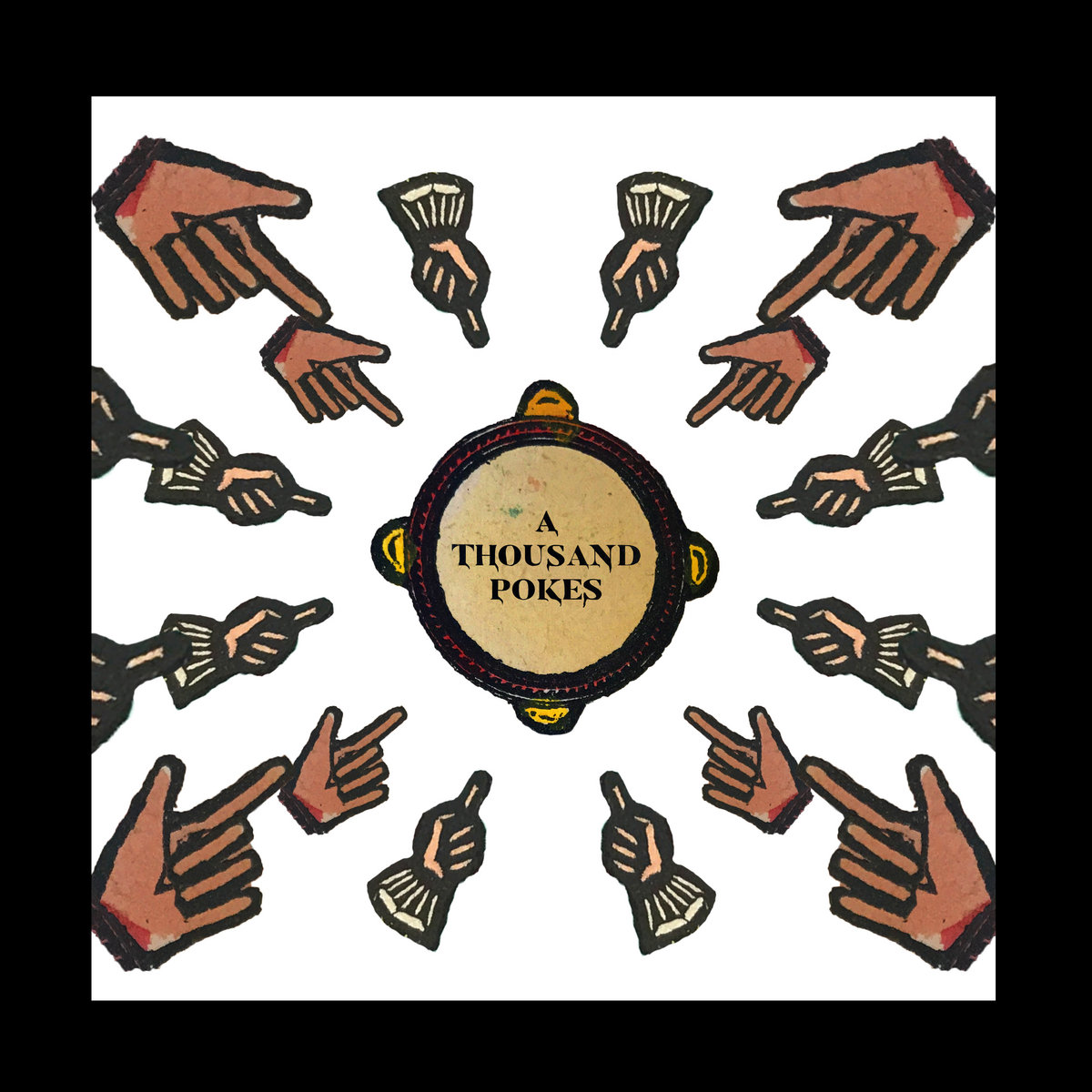
Stick In The Wheel-A Thousand Pokes


Ian Carter y Nicola Kearey, de Stick in the Wheel , hacen música folk de un modo un poco diferente al resto. Si bien en el pasado se han discutido los méritos relativos de conservar las tradiciones folklóricas y modernizar el género, el dúo va mucho más allá de ese debate. Reconocen que el acto de hacer música folk tiene connotaciones éticas y políticas y que recopilar y conservar canciones a menudo refuerza estereotipos y fortalece estructuras sociales desiguales. Como resultado, su música siempre se ha inclinado hacia un modernismo contundente y emocionante, algo arraigado en su propia localidad de Londres pero cuyo mensaje es completamente universal. Sus canciones resuenan con la alegría de la especificidad y el detalle, la alegría feroz de las voces marginadas que se hacen oír, la alegría furiosa de la gente que reclama su herencia.

A Thousand Pokes es la expresión más potente de esa ira y alegría hasta el momento. La canción principal avanza a paso rápido sobre un elegante motivo circular de guitarra eléctrica, mientras la batería golpea incesantemente y Kearey oscila entre el habla y la canción. Por un momento, justo antes de llegar a un final abrupto, la guitarra levanta la cabeza por encima del agua, se distorsiona como un fragmento perdido de una canción de Velvet Underground. Y luego se acaba, dejando un extraño y cargado escalofrío en su ausencia. Entre sus muchos talentos, Stick in the Wheel realmente sabe cómo terminar una canción. Te dejan con ganas de más, y luego instantáneamente te dan algo completamente diferente, algo que no sabías que necesitabas, como Burnt Walk , que se jacta de ser una de las canciones más sutiles y melódicas de su catálogo. Aquí, Kearey demuestra que puede trabajar en varios registros emocionales sin sacrificar el carácter esencial de su voz. La sutileza persiste en una interpretación de la vieja canción de los vendedores ambulantes, Lavender . Aquí, la banda está en su momento más delicado, solo el canto de Kearey y una guitarra acústica desarmantemente hermosa.

Londres, como siempre, es el centro del álbum. Stick in the Wheel tiene una relación amorosa pero nada sentimental con su ciudad natal, y canciones como Cracks presentan un retrato con todos sus defectos de la metrópolis como un lugar de grandes oportunidades y niveles de criminalidad aún mayores. What Can the Matter Be une una popular canción infantil con la historia de un asesino a sueldo del East End, presentada de manera sencilla y efectiva como una balada y aumentada por una enérgica guitarra española. Can't Stop es una concisa melodía inspirada en los años 60 basada en la versión de la Famous Jug Band de una composición de Wizz Jones. Una canción sobre un accidente de coche, tocada para reír. El resultado es perfecto, incluso si el humor es muy oscuro.


1. Crystal Tears 04:54
2. Back Of The Hatch 01:32
3. A Thousand Pokes 03:27
4. Burnt Walk 02:45
5. Lavender 02:08
6. The Cramp 01:46
7. Cracks 03:47
8. Can't Stop 02:03
9. What Can The Matter Be? 04:12
10. Watercress-o 04:01
11. Brisk Lad 01:54
12. Hush 01:38
13. Steals The Thief 07:24

domingo, 6 de noviembre de 2022

Fetén Fetén -Cantables II


La nueva entrega contiene dieciséis canciones en las que desfilan las voces de Fito & Fitipaldis, Bunbury, Coque Malla, Rozalén, Guitarricadelafuente, Depedro, El Kanka, Kevin Johansen, Ismael Serrano, La M.O.D.A., Luisa Sobral, Rita Payés, Isaac & Nora, Daniel, me estás matando, Augusto Bracho o Nina de Juan la vocalista de Morgan.

Voces de países como México, Argentina, Francia, Venezuela, Portugal o España se unen para abordar géneros como la ranchera, el vals, la chacarera, el bolero, el son, la milonga, la salsa e incluso el fado en su primera canción en portugués.


1 No Soy de Aquí 3:50 · Nina de Juan
2 Otro Vals 3:31 · Rozalén
3 Para Olvidarte 4:00 · Depedro
4 Límite 3:52 · Guitarricadelafuente
5 Volver a Ti 3:56 · Daniel, me estás matando
6 Perro del Deseo 3:34 · Enrique Bunbury
7 Júrame 3:42 · El Kanka
8 Borranchera 4:01 · Fito y Fitipaldis
9 Solamente Tú 4:07 · Isaac & Nora
10 Camotero 4:20 · Augusto Bracho
11 Sei Que Vai Passar 4:07 · Luísa Sobral
12 No Necesito 3:52 · Coque Malla
13 Destino Navegante 2:57 · Rita Payés
14 Años Dorados 3:48 · Ismael Serrano
15 De Noche 2:53 · Kevin Johansen
16 Diez Horas de Distancia 3:20 · La maravillosa orquesta del alcohol

domingo, 23 de mayo de 2021

Beirut - The Flying Club Cup


En su nuevo trabajo Condon supuestamente viaja del este europeo al oeste. Se va a París. Y digo supuestamente porque no se deshace de la influencia de su anterior trabajo, excepto por los títulos en francés y algún guiño a la «chanson». Los coros, las trompetas, el acordeón, el casiotone, la voz afectada (que ya es marca de la casa)… no suponen ningún salto radical en la trayectoria de este niño prodigio, pero sí es un buen paso.

uno de los discos más singulares de los últimos años: sonidos de orquesta balcánica, hechos por un americano. Desde el momento en el que lanzó su disco no descansó, con una gira bastante extensa que le llevó por Estados unidos y Europa


1 A Call To Arms
2 Nantes
3 A Sunday Smile
4 Guyamas Sonora
5 La Banlieue
6 Cliquot
7 The Penalty
8 Forks and Knives (La Fête)
9 In The Mausoleum
10 Un Dernier Verre (Pour La Route)
11 Cherbourg
12 St. Apollonia
13 The Flying Club Cup

miércoles, 20 de enero de 2021

Feten Feten - De Noche [FLAC]


“De noche” es el nuevo adelanto del próximo trabajo de Fetén Fetén, “Cantables II”, que verá la luz en mayo de 2021.

El nuevo tema de Fetén Fetén cruza el océano Atlántico y nos acerca a Argentina. “De noche” es la nocturnidad en forma de milonga, una oda a las horas más oscuras del día. La composición es obra de Diego Galáz y Jorge Arribas, los hombres detrás de Fetén Fetén, junto al argentino Sebastián Schon. La voz viene de la mano de otro argentino, el internacional Kevin Johansen.

En esta obra la noche es la fuente de inspiración, como ya antes lo ha sido para muchos artistas, como Neruda o Van Gogh. En “De Noche”, Fetén Fetén ilustran la noche con los sonidos característicos del violín, el silbido y el acordeón, todos ellos grabados en España. Además, se añaden a este peculiar instrumental la guitarra de Sebastián Henríquez y el contrabajo de Pablo Navarro, grabado desde Buenos Aires. Esta unión de sonidos de continente a continente nos lleva de viaje desde la Castilla española a la Argentina más clásica.

“Cantables II” es el próximo trabajo de Fetén Fetén, siguiendo a su anterior álbum, “Cantables”. Este proyecto nació en 2016 de la unión entre Galaz, Arribas y el argentino Schon. Sumaron letras, cantantes y melodías propias, y de ahí surgió un trabajo que contó con artistas como Natalia Lafourcade, Jorge Drexler o Pedro Guerra. Esta segunda parte verá la luz el próximo mayo.


1 De Noche

martes, 1 de mayo de 2018

Monsieur Doumani - Angathin


El galardonado grupo Monsieur Doumani, se formó en 2011 en Nicosia, Chipre, por Antonis Antoniou (tzouras), Angelos Ionas (guitarra) y Demetris Yiasemides (trombón, flauta).

Viniendo de diferentes orígenes musicales, pero influenciado por la tradición chipriota en varios niveles, Monsieur Doumani compone canciones chipriotas que se inspiran en la sociedad chipriota contemporánea, así como en las condiciones inestables de nuestra era. La identidad original del proyecto estuvo determinada por la adaptación de piezas tradicionales chipriotas, con un color contemporáneo especial en sonido y estado de ánimo, formando un estilo distintivamente propio.

WEBSITE: http://monsieurdoumani.com/
FACEBOOK: http://bit.ly/2p5T86w


1 Kick 'n' Slap 3:18
2 Hey You 4:32
3 Thorn of the Cactus 4:20
4 Fallow Fields 4:06
5 Mishmash 3:00
6 Gel Burda 3:04
7 Where Shall I Bang It? 3:26
8 Drinking and Kissing 4:51
9 Mother and Mistress of Us All 2:39
10 Little Car 4:09
11 Akamas' Dragons 4:22
12 Antics 5:46
13 Little Star 6:59

Frode Haltli - Avant Folk


The opening track of ‘Avant Folk’ is like a dream of what contemporary experimental folk-meets-jazz-meets-chamber-music might be. Composed by Frode Haltli, ‘Hug’ begins with a galumphing off-centre rhythm that could be an accompaniment to elephants waltzing before the wheezing bellows-breath of Haltli’s accordion creates delightfully airy whispers of noise that drift across the other instruments like wisps of cloud across the sky.

Then we get the entry of the theme, a compulsive Nordic ear-worm folk melody led by Hardanger fiddle and violin that’s half woozy sea-shanty and half universal pan-African groove, backed up by shuffle-beat drumming like Ed Blackwell with Ornette Coleman. As if that wasn’t enough for one tune already, the music continues to evolve, with a beautifully poised improvised solo on trumpet by Hildegunn Øiseth that sounds so perfect it should really win some kind of award on its own. The groove slows down, the elephant waltz returns to form a satisfyingly symmetrical conclusion and the music gradually resolves into silence, bringing to an end what has been seven and a half minutes of continuous invention. It’s quite a performance, and quite a band, the dectet of expert players covering enough instruments between them to simulate the tonal breadth of a full orchestra while retaining the humble, home-made aesthetic of a traditional folk ensemble, matching compositional sophistication and individual virtuosity with collective empathy and hard-won grace.

Elsewhere, as the album develops, the folk references expand to include echoes of west African desert blues, east European gypsy swing, Armenian double-reed laments and lugubrious Nordic village knees-ups on a range of material partly adapted from traditional hymn-tunes and songs from Norway and the Faroe islands to form a kind of north Atlantic gumbo. But ‘Avant Folk’ never feels like a slapdash fusion of different elements mashed together without regard for the integrity of the whole. Importantly, the band always sounds like a proper band, as fleet-footed as any improvisational jazz ensemble, and able to hurdle with ease the normal generic divides separating one type of music from another. By the time the listener reaches the end of the album’s final track, ’Neid’ – another Frode Haltli composition, like the opening ‘Hug’ – ‘Avant Folk’ has effectively created its own genre, a pleasingly congruent collection of stylistic traits that sounds like nothing so much as itself. All the music, whether composed by Frode Haltli or adapted from antique sources, is arranged jointly by Haltli and the band members.

So where did ‘Avant Folk’ come from and why does it sound so good? For a start, Frode Haltli (born 1975, Norway) is, like many of the ensemble’s star players, a classically-trained virtuoso who from an early age (he began the accordion at seven) has been well used to working between different forms of music, from traditional folk to the avant-garde, and to collaborating with players from all sorts of backgrounds. Haltli also composes, both on his own and with Maja S.K.Ratkje (his co-producer on ‘Avant Folk’, who is responsible for the album’s editing and mixing), and has developed very strong links with fellow musicians and composers both within Norway and internationally, once again working across the normal boundaries demarcating one musical form from another, recording the complete accordion works of Arne Nordheim, for example, but also appearing with the various groups of jazz saxophonist Trygve Seim. His debut recording for ECM, ‘Looking On Darkness’ was released in 2002, followed by ‘Passing Images’ from 2007, (with trumpeter Arve Henriksen, violist Garth Knox and Maja S.K. Ratkje on vocals), and ‘Air’ (2016), a recording of music for accordion and strings by Hans Abrahamsen and Bent Sorensen with the Arditti Quartet and the Trondheim Soloists. His debut release for Hubro, ‘Vagabonde Blu’ (2014), is a live solo recording featuring works by Salvatore Sciarrino, Aldo Clementi and Arne Nordheim. As if any further exemplars of Frode Haltli’s customary melding of the classical repertoire with folk, jazz and beyond were needed, we can also note his current duo with the Norwegian violinist Gjermund Larsen; The Snowflake Trio (with Irish flautist Nulala Kennedy and Norwegian fiddler Vegar Vardal); and a trio with another fiddler, Ragnhild Furebotten, and the Swedish nyckelharpist Emilia Amper.

The breadth of Frode Haltli’s interests is not unusual in Norwegian music and this is paralleled by a number of his collaborators on ‘Avant Folk’, many of whom – like the inspirational fiddler Erlend Apneseth (a regular Hubro artist in a number of settings) or the keyboardist Stale Storlokken (of Supersilent and Motorpsycho, among others) enjoy similarly wide-ranging careers that weave in and out of numerous musical styles and settings. But the last word on ‘Avant Folk’ has to be the music. The album ends on the suitably epic note of Haltli’s ‘Neid

https://www.discogs.com/es/Frode-Haltli-Avant-Folk/release/11816519


1 Hug 07:22
2 Trio 04:22
3 Kingo 10:44
4 Gråtar'n 05:30
5 Neid 13:29

miércoles, 16 de agosto de 2017

Eloïse Decazes & Eric Chenaux - La Bride


Véritable chanteuse halogène, Eloïse Decazes hante depuis quelques années les ruines de la chanson française, notamment au sein du groupe Arlt. On l’a par ailleurs entendue miniaturiser les Folksongs de Luciano Berio en compagnie de Delphine Dora ou improviser sur cassette des hymnes au Titanic avec Le Ton Mité. Son timbre mystérieux, dont on peine à démêler le chaud du froid, son articulation faussement sereine, et cette façon de perturber les durées en chantant l’ombre des notes plutôt que les notes sont immédiatement reconnaissables.

Quant à Eric Chenaux, guitariste virtuose, il est connu pour avoir cessé un beau jour de prendre son outil au sérieux, préférant y voir un instrument bâtard et s’étonner lui-même d’en sortir tout à la fois des sons d’orgue ou de viole de gambe, de canne à pêche électrique ou de fusil tombé dans l’eau. Le pire, c’est que c’est très beau. À part ça, c’est un théoricien retors et il chante admirablement. Pour preuves, ses albums parus sur le label Constellation, dont le syncrétisme minimal, le groove et la spéculation considérée comme un érotisme, évoquent une espèce d’Arthur Russell piqué de Marvin Gaye. C’est aussi un improvisateur de premier plan, qui défonce tous les clichés du genre, à force d’humour et de paradoxes.

L’amour de ces deux grands irréguliers pour la chanson ancienne les rassembla sur un même disque, enregistré en deux après-midi à Toronto et paru sur le label belge Okraïna. On y entendait principalement de longues complaintes glanées du Moyen Âge au 19ème siècle, pleines de meurtres et de métamorphoses, étirées d’une voix pâle et hérissées de contrepoints guitaristiques et de mélodica patraque, de dissonances et de drones égorgés à l’archet. On parla pour se rassurer de Nico et John Cale, ou d’Areski-Fontaine, mais en vérité ce drôle d’objet ne ressemblait pas à grand-chose de connu. Cette rencontre de l’inouï et du familier, du très ancien et du très moderne, du très savant et du pas savant du tout frappa quelques têtes et le disque fut rapidement épuisé, devenant l’objet d’un petit culte assez fervent chez les amateurs de beautés pas franchement normées.

La bride, qui sort aujourd’hui à l’enseigne lausannoise three:four records (Norberto Lobo, Danny Oxenberg & Bear Galvin, Mike Wexler, etc.) est leur deuxième album et il est peut-être encore plus étonnant.

Qu’est-ce qu’on y trouve ? Dix nouvelles chansons d’autrefois repensées à deux et de fond en comble, arrangées avec autant de folie que de science. On meurt toujours beaucoup dans ces chansons sans refrain, qui sont des rouleaux et des ruisseaux. On ne sait y aimer que furieusement et on s’y perd à peu près partout. On en raconte des vertes et des pas mûres dans une langue aux tournures insensées. Les animaux ont la parole et la forêt flanque la frousse, les enfants font l’amour, et les pères meurent au fil de l’épée du fiston, c’est bien fait. Mais Eloïse Decazes, plus danseuse qu’actrice, plus plasticienne que conteuse, plus musicienne que quoi que ce soit, n’en rajoute pas dans le littéral, ne théâtralise jamais ses récits, préférant souffler les mélodies comme du verre ou en gratter le calcaire et la craie, cherchant l’air dans le déroulé touffu des couplets. Sa voix d’aube et ses agencements curieux ainsi que les multiples parti-pris sonores de Chenaux sont autant de fusées éclairantes qui dans la noirceur des thèmes font un ballet d’ombres et de lumières très lent et très beau. Il faut entendre ces arpèges fermement désaxés sur le nylon que le vibrato et les motifs entrelacés de guitare électrique viennent troubler voire liquéfier par vagues. Il faut entendre les bourdons et les lucioles. C’est rempli de surprises et d’émotions contrastées. Autre chose qui nous sidère, c’est combien ce drôle d’album fait parfois tourner la tête, à force de majesté vocale et de faux violons rampants, de suicides harmoniques ou de soli égarants, combien il subvertit ses formes, mais sans tapage, avec bienveillance et dans le plus grand calme.

La bride n’est pas un disque de folk, précisons-le, ni même d’ailleurs de musique dite traditionnelle. C’est un disque de musique nouvelle rêvé et pensé à partir de très vieilles mélodies, ce dont attestent la production toute en stéréo mouvante, le psychédélisme doux, un dialogue souriant avec une certaine modernité intrépide (Monk, Cage, Derek Bailey ou les disques « Obscure » de Brian Eno en ligne de mire), l’amour des questions et la quête inlassable d’un présent sans cesse recommencé.

A true chanteuse halogène, Eloïse Decazes has been haunting the ruins of French chanson for a few years now, notably with the group Arlt. Elsewhere she can be heard miniaturizing Luciano Berio’s Folksongs in the company of Delphine Dora, or improvising hymns to the Titanic on cassette with Le Ton Mité. Her mysterious timbre is immediately recognizable, as warm as it is cold, her deceptively serene articulation, and her way of warping durations by singing the shadows of notes in lieu of the notes themselves.
Eric Chenaux - a virtuoso guitarist - is known for having decided one day to cease taking his chosen instrument seriously, preferring to treat it as a bastard utensil by making it sound at the same time like an organ, a viola da gamba, an electric fishing rod and a handgun fired underwater. The worst part is that the result is quite beautiful.
Apart from this, he's a mad theorist and an admirable singer. For evidence, see his albums released on the Constellation label, which - with their minimal syncretism, their groove and their speculation considered as eroticism - evoke a sort of Arthur Russell cross stitched with Marvin Gaye. He is also an improvisor of the first order, destroyer of all clichés associated with the genre by dint of humor and paradox.
The shared enthusiasm of these two great anomalies for the chanson ancienne brought them together on the same album, recorded over the course of two afternoons in Toronto and issued by the Belgian label Okraïna (2012). One predominantly hears long laments gleaned from the Middle Ages through to the 19th century, rife with murders and metamorphoses, strung out with a pale voice and bristling with guitar counterpoint and dodgy melodica, drones and dissonances slaughtered with a bow. One seeks to reassure oneself by way of comparison to Nico and John Cale, or to Areski-Fontaine, but in truth this curious object does not resemble anything known.
Their inaugural meeting of the unheard-of and the familiar, the antique and the ultra-modern, the learned and the not-learned-at-all impacted quite a few heads and the album quickly sold out, becoming the object of a little fervent cult among the lovers of not patently standardized beauties.

La bride [The Bridle], which is here released by the Lausanne-based three:four label (Norberto Lobo, Danny Oxenberg & Bear Galvin, Mike Wexler, etc.), is their second album and it is perhaps even more surprising.

What do we find here? Ten new songs from old times, reimagined from top to bottom, arranged with equal parts madness and precision. One dies always and often in the rolling waves and riptides of these songs without refrain. You can only love furiously and you lose yourself almost everywhere. One hears vicious tales sung in a language characterized by insane turns of phrase. Animals have the word and the forest frightens to death, children make love, and if fathers die by the swords of their sons, it is well deserved. But Eloïse Decazes, more dancer than actress, more visual artist than storyteller, more musician than anything else, does not embellish the literal, never dramatizes her narratives, preferring to blow her melodies like glass or scrub and distill them to limestone and chalk, seeking air in the wooly outlines of verses. Her voice like dawn and her curious formations accompanied by the multiple sonic stances of Chenaux are like myriad flares that inscribe a ballet of shadows and lights in the dark material of the themes, very slow and very beautiful. One hears these firmly unstable arpeggios played on nylon strings that interwoven patterns of electric guitar come to disturb or even liquefy like waves. It is comprised of surprises and conflicting emotions. Furthermore, we are stunned by the way this curious album sometimes induces vertigo, with its vocal majesty and fake crawling violins, its harmonic suicides and misleading solos; how handily it subverts its forms, but without fuss, with kindness and in the utmost calm.

Let us be clear: La bride is not folk music, nor even so-called traditional music. It is an album of new music dreamt and conceived from very old melodies, an observation testified to by its production - all in shifting stereo - its soft psychedelia, a dialogue with a certain intrepid modernity (Monk, Cage, Derek Bailey and the "Obscure" records of Brian Eno are all visible from here), the love of inquiry and peregrinations for a present that is ceaselessly renewed.

credits

released April 14, 2017

Eloïse Decazes – voix, Eric Chenaux – guitare électrique, guitare nylon, voix
Chansons traditionnelles / arrangements – Eloïse Decazes et Eric Chenaux
Enregistré et mixé par Cyril Harrison au Pouget et à Paris, entre juillet 2015 et avril 2016
Masterisé par Harris Newman au Greymarket, Montréal QC
Artwork – Brest Brest Brest
Merci à Mariette Cousty, Sing Sing, Gaëtan Seguin, Maxime Guitton


https://wearethreefour.bandcamp.com/album/la-bride


1. Le deuil d’amour 05:06
2. Dedans la ville de plaisantement 05:39
3. La belle endormie 05:39
4. Au jardin des amours 04:37
5. Bella Louison 03:46
6. Le flambeau d’amour 03:34
7. L’amante du dauphin 03:15
8. La mie qui meurt 05:58
9. Quand je menais mes chevaux boire 04:51
10. Quand j’tiens la bride de mon cheval 04:23